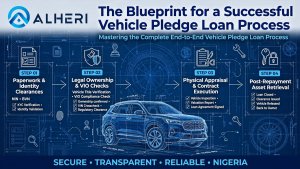
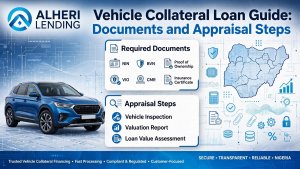
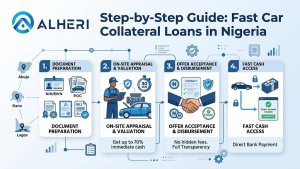
A vehicle collateral loan allows an eligible car owner to use a vehicle as security for borrowing, subject to the lender’s terms and applicable law. Before starting the process in Nigeria, prepare your identification and ownership documents, make the vehicle available for inspection, understand the valuation and review the complete agreement. These steps matter whether you live in Kano, Lagos or another Nigerian city.
At ALHERI LENDING COMPANY LTD, our published vehicle pledge information identifies documents that applicants should prepare. The exact requirements should always be confirmed before an appraisal appointment.
Step 1: Prepare Your Documents
Having complete and consistent documents helps establish your identity, ownership and the vehicle’s legal status.
The published checklist includes:
- Valid identification: NIN and BVN details, as requested for the application and verification process.
- Proof of ownership: Vehicle registration or other acceptable ownership documents.
- Purchase records: Purchase agreement and relevant transfer records, where applicable.
- VIO documentation: A valid roadworthiness certificate, where required.
- CMR clearance: The requested police or vehicle-record check to help verify that the vehicle is not reported stolen.
- Customs documents: Relevant import and clearing papers for applicable vehicles.
- Insurance: Valid insurance documents where required.
The meaning and availability of particular vehicle checks can vary. Ask the lender which document or report it accepts as CMR clearance and how you can obtain it through the appropriate authority. Never assume that one document replaces all other ownership checks.
Step 2: Prepare the Vehicle for Inspection
A proper appraisal considers the vehicle’s identity, condition and marketability. Before visiting the lender:
- Clean the vehicle sufficiently for inspection.
- Bring available servicing and repair records.
- Confirm that the chassis or VIN and registration details match the documents.
- Disclose known mechanical faults, accident repairs and outstanding ownership issues.
- Make the vehicle available for a physical inspection and odometer reading.
An appraisal is not simply a visual estimate. Mechanical condition, mileage, model, age, demand and documentary verification can affect the assessed value.
Step 3: Understand the Valuation
Ask how the lender determines the vehicle’s assessed value and what percentage of that value may be considered for the facility. The assessed value is not necessarily the same as the original purchase price or the amount you could receive from a private buyer.
Request an explanation if the valuation appears inconsistent with the vehicle’s condition or available market evidence.
Step 4: Review the Contract Before Signing
Read the agreement carefully and confirm:
- The principal amount and all applicable charges.
- The repayment date and permitted repayment method.
- Late-payment consequences.
- Where the vehicle will be stored and who is responsible for its custody.
- The conditions for releasing the vehicle after repayment.
- The complaint process and contact details.
Ask for clarification on anything you do not understand. Keep a signed copy.
Step 5: Confirm Secure Vehicle Custody
For a physical-custody pledge, ask whether storage is protected by 24/7 CCTV, whether odometer readings and vehicle condition are recorded, and whether unauthorised driving is prohibited. Request a written inventory and dated photographs at handover.
A careful document check, transparent valuation and signed agreement help car owners make more informed borrowing decisions without overlooking the risks.
Have Questions About Your Car Value?
Get a free instant vehicle appraisal on WhatsApp from our team.